


Recycling Tech Advances Globally, Driven by AI and Automation
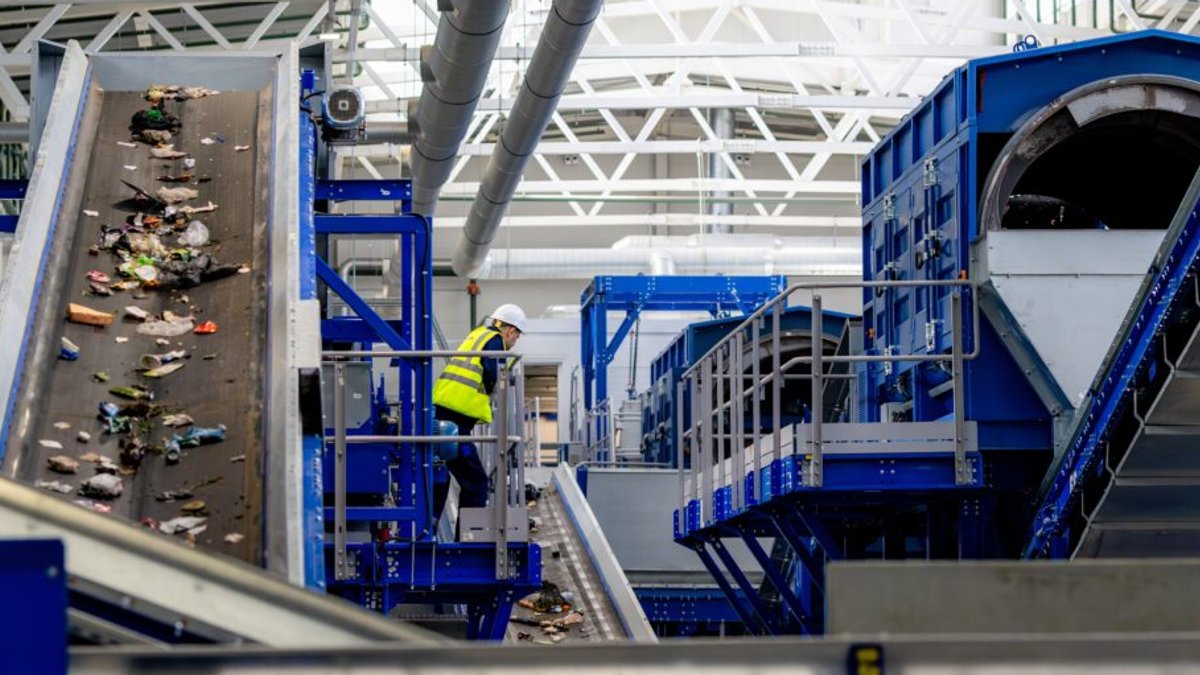
A global survey by Recycling International reveals that recycling technology is rapidly expanding into new markets, with manufacturers preparing for a future dominated by artificial intelligence, automation, and critical raw material recovery.
The survey, conducted among 55 recycling technology providers, highlights the growing international presence of the sector. Respondents supply equipment to over 20 countries each, with some operating in up to 60 markets worldwide.
Global Reach and Regional Growth
Recent deliveries have been made to diverse markets, including Australia, Brazil, China, Morocco, Finland, India, Japan, Ghana, the UAE, Canada, and the US. The Middle East and Africa region is a fast-growing market, holding nearly 10% of the global recycling technology market share, while Latin America accounts for 5.5%.
The Asia Pacific region leads the recycling equipment market with a 35.6% share, followed by North America at 28.3% and Europe at 20.8%.
Innovations in Recycling Technology
Several companies are introducing new technologies to address emerging waste streams. Bronneberg, a Dutch manufacturer, has launched the Garner DiskMantler, an automated system that dismantles hard disk drives without shredding, recovering high-purity materials and valuable neodymium magnets.
Stadler, a German company, has unveiled the Air Drum Sifter and is expanding its AI-powered StadlerConnect platform. Connected plants using this technology have increased material yields by up to 18% and reduced unplanned downtime through predictive maintenance.
Italian firms are also making strides. For Rec is targeting the growing photovoltaic recycling market with a solution for end-of-life solar panels, while Iris-Mec has developed an advanced depollution line for hybrid and electric vehicles, emphasizing digital traceability.
Vezzani has introduced a gravity-feed inclined shear with cutting forces of up to 2,700 tonnes, combined with intelligent diagnostics and predictive maintenance. BRT Hartner is focusing on hyperspectral imaging and AI-based material classification in its new Automatic Sorter.
Market Resilience and Future Outlook
Despite concerns over geopolitical tensions and shifting trade policies, respondents describe the market as resilient. Some report delayed investment decisions due to tariff uncertainty, while others see projects gaining momentum as confidence returns.
Looking ahead to 2036, industry leaders anticipate recycling plants becoming more digital, connected, and specialized. Julia Stadler of Stadler expects AI to transform operations, turning recycling facilities into data-driven smart factories.
Lisa O’Donoghue, CEO of Votechnik, sees recycling becoming a strategic pillar of Europe’s critical raw materials supply chain. She highlights the importance of smart solutions and recalls building her company around AI, automation, and robotics over 15 years ago.
The full analysis of recycling technology trends will appear in the upcoming edition of Recycling Technology.

EMR introduces new brand identity


