


Maersk and MOL Push Multi-Fuel Shipping Strategy
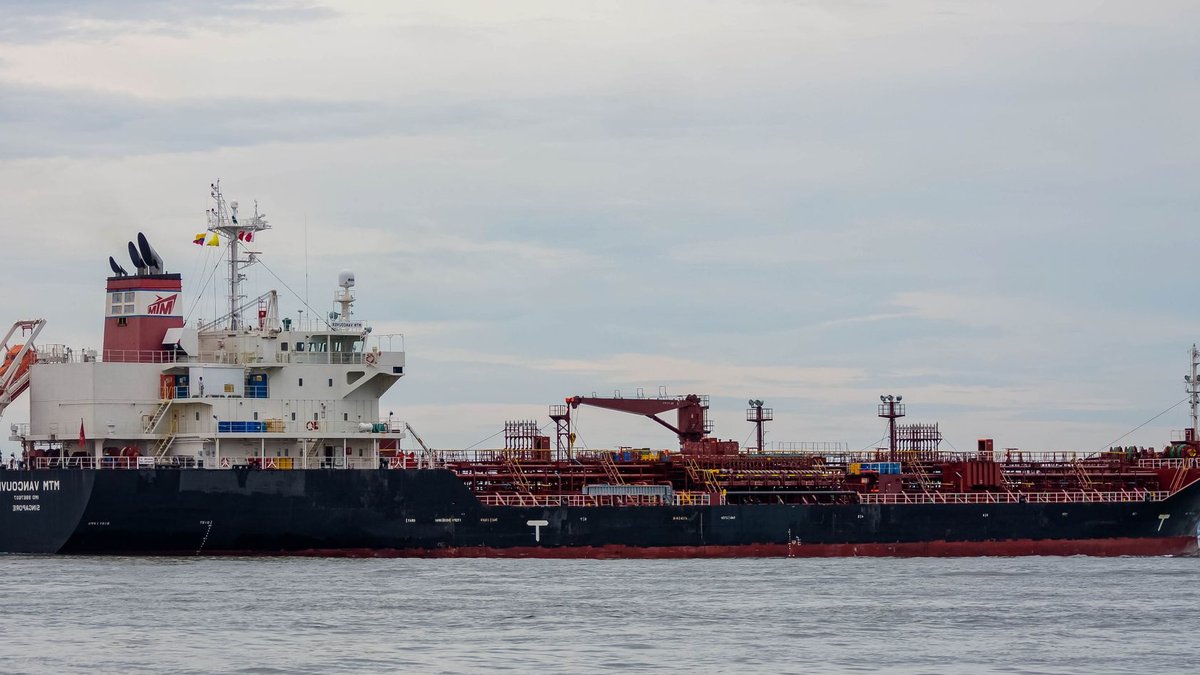
Maersk and Mitsui OSK Lines (MOL) are advocating for a multi-fuel strategy to decarbonize the shipping industry during New York Climate Week. The Global Maritime Forum organized an event to discuss the fifth edition of its “Climate Action in Shipping: Progress towards shipping’s 2030 breakthrough.” The report, produced in collaboration with the UCL Energy Institute, highlights mixed progress toward the target of sourcing five percent of fuel from zero-emission sources by 2030.
According to the GMF, the latest report “reveals mixed progress towards that swiftly approaching target, with multiple indicators demonstrating the flow-on effects of economic and political upheaval, the crisis in Hormuz, energy security and supply chain concerns, and the regulatory uncertainty caused by the failure to adopt the IMO’s Net-Zero Framework (NZF) last year.” The event, held in lower Manhattan at the offices of port and engineering consultants ARUP, featured a panel, moderated by the GMF’s Director of Decarbonization, Jesse Fahnstock, which offered differing viewpoints on the paths towards the GMF year 2030 target of getting to the international side of the industry sourcing 5%, and upwards, of its fuel from “scalable zero-emission sources”. The report is produced jointly by UCL Energy Institute and the Getting to Zero Coalition- tied to the “Marrakech Partnership”- a cooperation framework developed at the 2016 COP conference.
Regulatory hurdles and economic factors
The latest findings reveal that economic and political upheavals are slowing progress. Supply chain concerns, the crisis in the Hormuz Strait, and energy security issues are impacting indicators. Regulatory uncertainty remains high due to the failure to adopt the International Maritime Organization’s Net-Zero Framework last year. Officials from the Marshall Islands urged for global responses to these common problems.
Albon T Ishoda, the Marshall Islands’ Ambassador to Fiji and the Pacific Islands, spoke at the event. He supports the Net-Zero Framework but noted that not all nations are ready for a global levy. The upcoming IMO MEPC 85 meeting in late November will be a key moment for the industry to address these stalled negotiations.
Diversification as a strategy
Maersk representatives emphasized the need for optionality and flexibility. Concepcion Boo Arias, the company’s Director of Global Partnerships & ESG, argued that diversification is the way forward. Maersk is betting on methanol fueling but recently ordered 42 LNG-dual fueled vessels. Boo Arias also mentioned ethanol fuel and onboard carbon capture as potential solutions.
Read Also: Geopolitics Spur Transformative Shift in Recycling
The Panama Canal Authority’s representative, Beatriz Gonzales, discussed Green Corridors. These initiatives aim to establish partnerships with fuel suppliers to bring alternative fuels to transiting vessels. The focus remains on making these new fuel sources more affordable and closing the price gap with traditional fuels.
Shifting the cost burden to the cargo side could help fund this transition. Tatsuro Watanabe from MOL suggested that vessel operators and cargo owners should share the “green premium.” This approach respects the diversity of the international maritime business, where different vessel types traverse various routes and geographies.
Technology neutrality and short-term actions
MOL’s Watanabe called for actions that can be taken today. He pointed to technology neutrality as a guiding principle, where multiple fuels—including those not yet completely “green”—play a role in the path forward. The company has experimented with wind sails to lower fuel consumption, demonstrating that diverse solutions are necessary for a sector as complex as shipping.
Barry Parker is a New York-based maritime specialist and writer, associated with Seatrade since 1980. His early work was in drybulk chartering, and in the early 1990s he moved into shipping finance where he served as a deal-maker and analyst with a leading maritime merchant bank. Since the late 1990s he has worked for a group of select clients on various maritime projects, also remaining active as a writer. Barry Parker is the author of an Eco-tanker study for CLSA and a presentation to the Baltic Exchange Freight Market User Group on the arbitrage of tanker FFAs with listed tanker equities.

Geopolitics Spur Transformative Shift in Recycling


